Let’s skip the part where we pretend this is complicated. It isn’t.
When a child says they have been abused, the next step is not a forgiveness session. It is not a quiet meeting with church elders. It is not a spiritual conversation about bitterness, resentment, sin, or whether the victim has a forgiving heart.
It is a phone call to law enforcement or child protective services. Period. Got it?
ProPublica and the Minnesota Star Tribune recently published a disturbing investigation into the Old Apostolic Lutheran Church, describing child sexual abuse that, according to their reporting, has stretched across families, congregations, states, and generations. The details are painful. The pattern is familiar. Too familiar.
Allegations handled inside the church. Victims encouraged to forgive. Leaders failing to report. Children left in proximity to people accused of hurting them. Families shaped by secrecy, spiritual pressure, and fear.
And, of course, statements from leadership suggesting these are isolated incidents, misunderstandings, or failures of knowledge rather than signs of a deeper system problem.
That sound you hear is the accountability alarm going off.
The Problem Is Not Faith. The Problem Is Failed Protection.
This is not an argument against faith.
Healthy faith communities can be places of belonging, moral formation, service, and deep human support. I know that. You know that. Many survivors know that too, which is part of what makes institutional betrayal so damaging.
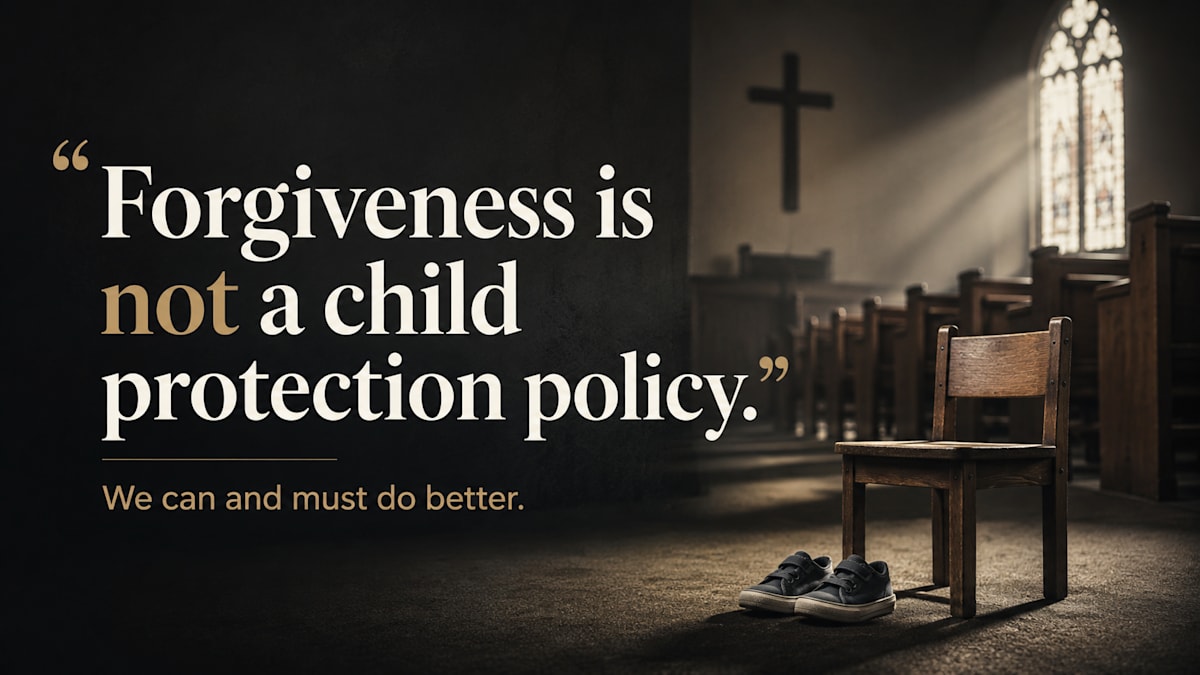
The problem is not that a church believes in forgiveness. The problem is when forgiveness becomes a substitute for protection. The problem is when spiritual authority becomes a shield against legal accountability. The problem is when leaders treat abuse as a sin to be resolved rather than a crime to be reported.
The problem is when the burden shifts from the person who harmed a child to the child who is expected to forgive, stay quiet, and return to the same community where the harm occurred.
That is not holiness. That is institutional failure pretending to be holy.
Good Intentions Are Not a Child Protection System
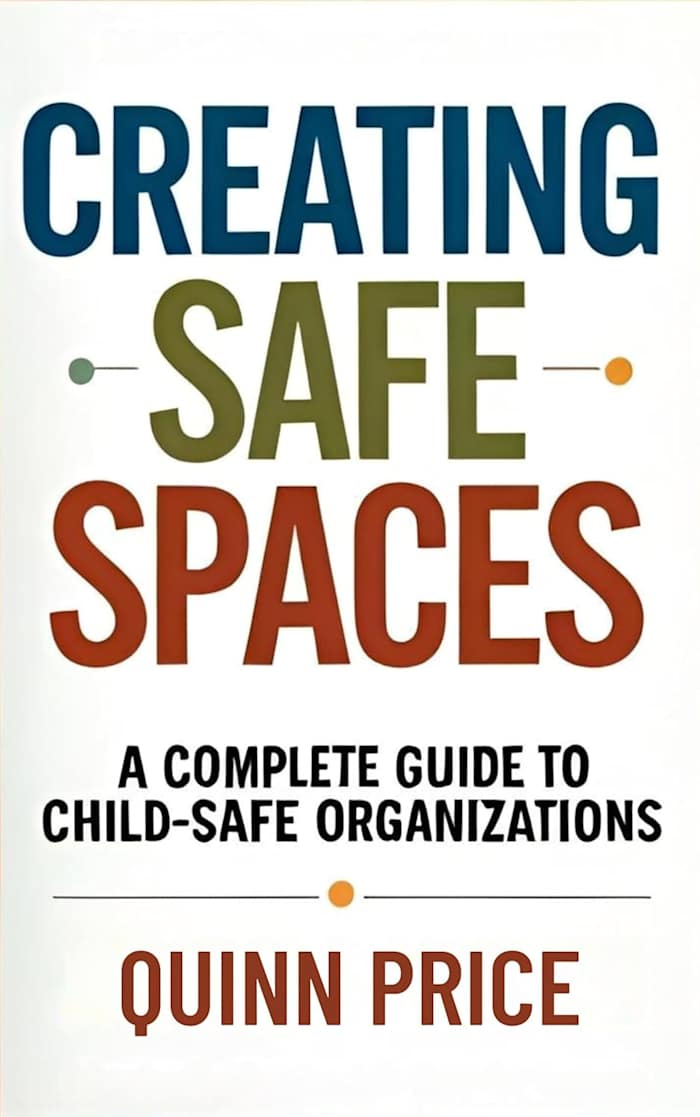
In Creating Safe Spaces, I argue that organizations do not protect children because they care. They protect children because they build competent systems.
That distinction matters.
Every institution says it cares about children. Churches say it with particular confidence. They use language like family, trust, purity, righteousness, community, and love. But language does not stop predators.
Systems do. Clear policies stop predators. Two-deep leadership stops predators. External reporting stops predators. Skill-based training stops predators. Environmental safeguards stop predators. Victim-centered response stops predators. Audits, transparency, and consequences stop predators.
Good intentions merely create a warm room where adults feel reassured while children remain exposed.
The ProPublica story reads like a case study in what happens when an organization violates nearly every major child-safety principle at once.
Not one failure. A stack of failures. And stacked failures become a conveyor belt.
Failure One: Internal Handling Instead of External Reporting
This is the big one.
When abuse is suspected, church leaders are not investigators. They are not prosecutors. They are not forensic interviewers. They are not child protection professionals. They may be kind. They may be sincere. They may be respected. They may have raised large families and taught Sunday school for forty years.
That does not make them qualified to investigate child sexual abuse.
In fact, their closeness to the community often makes them uniquely unqualified. They know the families. They know the reputations. They know the social consequences. They know what a scandal will do to attendance, donations, weddings, funerals, and intergenerational relationships.
That is exactly why external reporting matters.
In a child-safe organization, suspected abuse goes to law enforcement or child protective services immediately. Not after a meeting. Not after prayer. Not after the accused has had time to explain. Not after elders determine whether the allegation feels credible.
Immediately.
The job of a church leader is not to decide whether abuse happened. The job of a church leader is to protect the child and report the concern. Anything else is amateur hour with catastrophic consequences.
Failure Two: Weaponized Forgiveness
Forgiveness can be beautiful when freely chosen by the person harmed.
Forced forgiveness is something else entirely.
It can become spiritual coercion. It can become social control. It can become a gag order with religious music playing in the background.
According to ProPublica’s reporting, survivors described being pressured toward silence, forgiveness, or face-to-face encounters with abusers. That is not trauma-informed care. That is not victim support. That is not restoration.
It is a second injury.
A child who discloses abuse needs safety, belief, professional support, and protection from further contact with the accused. They do not need adults rushing them toward spiritual resolution so the community can breathe easier.
Here is a hard truth religious communities need to hear:
If your doctrine of forgiveness makes it harder for a child to report abuse, your doctrine is being applied in a dangerous way. If your forgiveness practice reduces consequences for abusers, your practice is unsafe.
If victims are treated as spiritually deficient because they refuse to “move on,” your community has confused silence with peace. Peace built on silencing victims is not peace. It is complicity.
Failure Three: No Real Consequences for Accused or Admitted Offenders
Child safety requires immediate protective action. That does not mean mob justice. It does not mean abandoning due process. It does not mean deciding guilt in a hallway.
It means the accused person is removed from access to children while qualified authorities do their work.
No teaching. No youth activities. No sitting near children in worship. No informal mentoring. No rides. No “we’ll keep an eye on him.” No “he has repented.” No.
One of the most chilling patterns in institutional abuse is the gap between what adults know and what they do. Someone hears something. Someone suspects something. Someone has a private concern. Someone warns a leader.
Then the accused person remains in the environment. Children notice that. Victims notice that. Predators notice that most of all.
When there are no consequences, the system teaches everyone the rules. Children learn they are not truly protected. Victims learn disclosure is dangerous. Predators learn the institution can be managed.
That is how abuse becomes generational.
Failure Four: Authority Bias and Hierarchy Protection
Closed religious systems often create a dangerous equation: Leader speaks. God approves. Member obeys.
That may work for coordinating potlucks. It is disastrous for an abuse response.
When members are taught that spiritual leaders speak with divine authority, questioning those leaders can feel like questioning God. That makes children and parents easier to silence. It makes victims easier to pressure. It makes whistleblowers easier to shame.
Predators thrive in that environment. They do not need the whole church to be corrupt. They only need the church to be deferential, conflict-avoidant, and reputation-conscious. That is enough.
A child-safe culture does the opposite. It decentralizes protection. It teaches every adult that they are responsible to act. It makes reporting normal. It welcomes questions. It protects whistleblowers. It tells parents, volunteers, and children: you do not need permission from a religious leader to call the authorities.
That one sentence could save lives.
You do not need permission.
Failure Five: No Skill-Based Training
Most churches train people to be nice. They do not train them to recognize grooming.
They do not train them to respond to disclosure. They do not train them to interrupt boundary violations. They do not train them to document concerns. They do not train them to report externally. They do not train them to withstand pressure from respected families who want the problem to go away.
That is not a small gap. That is the gap predators walk through.
In Creating Safe Spaces, I make the case that training has to change behavior. Awareness is not enough. A volunteer who has watched a video and signed a form may feel trained while remaining completely unprepared for the real moment that matters.
The real moment sounds like:
“I don’t like being around him.”
“She told me not to tell.”
“He comes into my room at night.”
“The pastor said we should forgive and not talk about it.”
What does your organization expect an adult to do in that moment? If the answer is not practiced, specific, documented, and externally accountable, you do not have training. You have theater.
Failure Six: Weak or Missing Policy Architecture
Strong child protection policies are not vague statements about valuing children. They are platybooks. They are operational systems. They say who must report. They say when to report. They say where to report. They say what happens to the accused. They say how victims are supported. They say what boundaries adults must maintain. They say how one-on-one contact is prevented. They say how transportation, bathrooms, counseling, youth events, overnight stays, and digital communication are handled.
They say how the organization audits compliance. They say what consequences follow when adults violate policy.
A policy that says “we take abuse seriously” but does not create mandatory external reporting is not a child protection policy. It is a comfort document. A policy that allows elders, pastors, or preachers to handle allegations internally is not a child protection policy.
It is a liability machine.
A policy that places spiritual reconciliation before child safety is not a child protection policy. It is institutional self-protection.
Failure Seven: No External Accountability
Closed systems decay.
They may begin with sincerity. They may be filled with good people. They may have beautiful traditions and deep bonds.
But without external accountability, they drift toward self-protection.
That is not unique to churches. Corporations do it. Governments do it. Schools do it. Families do it.
When reputation is threatened, systems protect the system. That is why child safety cannot be left entirely inside the institution. There must be outside reporting, outside review, outside expertise, outside audits, and outside consequences.
The more insular the community, the more external accountability matters. If your church discourages contact with outsiders, you need stronger reporting rules, not weaker ones. If your members are socially dependent on the congregation, you need stronger whistleblower protection, not vague assurances.
If victims fear being cut off from family, heaven, or belonging, you need trauma-informed outside support, not another elder meeting. The system that benefits from silence cannot be trusted to manage silence.
Failure Eight: No Continuous Learning
A child-safe organization does not say, “We handled that.”
It asks:
What did we miss?
Where did our policies fail?
Who knew something and did not act?
What pressures kept people silent?
What safeguards were missing?
What training failed to prepare people?
What environmental or cultural conditions created access?
What must change before another child is harmed?
That is the difference between image management and accountability.
Image management asks, “How do we survive this?”
Accountability asks, “How do we make sure this never happens again?”
The ProPublica story should trigger that second question in every church, school, youth group, camp, sports league, and family-centered organization in the country. Not because every organization has the same doctrine. Because every organization has the same temptation.
Protect the institution. Minimize the scandal. Believe the respected adult. Quiet the victim. Call it complicated.
Move on.
That temptation must be named, confronted, and defeated.
What Should the Old Apostolic Lutheran Church Do Now?
If OALC leaders want to protect children, statements are not enough. They need a real child protection reset.
Here is the beginning of one:
First, require immediate external reporting of any suspected child abuse to law enforcement or child protective services. No internal review first.
Second, prohibit any church-led confrontation between victims and alleged abusers. Forgiveness cannot be coerced, staged, or spiritually pressured.
Third, remove accused individuals from all access to children pending investigation.
Fourth, create written policies covering abuse reporting, adult-child boundaries, transportation, youth activities, bathrooms, overnight stays, counseling, digital communication, and consequences for violations.
Fifth, provide trauma-informed support for victims and families through licensed professionals outside the church.
Sixth, train every preacher, elder, volunteer, parent, and youth worker in grooming recognition, disclosure response, mandatory reporting, and bystander intervention.
Seventh, invite an independent child protection organization to audit the church’s policies, culture, reporting history, and current risk.
Eighth, publicly report progress.
Not names. Not private victim details. Progress.
Number of leaders trained.
Policies adopted. Audits completed. Reporting procedures clarified. External partnerships formed. Victim support resources funded.
If that feels uncomfortable, good. Protecting children is supposed to be more important than institutional comfort.
The Larger Lesson for Every Church
It would be easy to read this story and point at the Old Apostolic Lutheran Church as if the rest of us are safely outside the frame.
We are not.
Every church has to answer the same question:
When child safety conflicts with reputation, doctrine, habit, hierarchy, family loyalty, or adult comfort, which one wins?
Not in theory. In practice.
Not in a sermon. In the phone call.
Not in the policy binder. In the moment a child discloses something terrible and the adults in the room feel the full weight of what reporting will cost.
That is when your real policy shows up. That is when your real theology shows up. That is when your real values show up.
Children do not need another institution that says it cares. They need institutions that are competent enough to prove it.
We Can and Must Do Better
There is a sentence I wish every child-serving organization would put on the wall:
Good intentions are not enough.
Then under it, in smaller print:
And we will never ask children to pay the price for our incompetence.
That is the work.
Not vague concern. Not reputation management. Not spiritual bypassing. Not forgiveness theater.
The work is clear policy, skilled adults, external reporting, trauma-informed care, environmental safeguards, consequences, audits, and a culture where everyone understands that protecting children is not a side program.
It is the test of the whole system.
The Old Apostolic Lutheran Church has a choice. So does every church reading this.
Choose secrecy or transparency. Choose internal handling or external accountability. Choose adult comfort or child safety. Choose the appearance of holiness or the hard, measurable work of protection.
The children are watching.
So are the survivors.
And so, finally, is the public.
Read more about the church and the incident that prompted this article.
Read more about the solution in my book, Creating Safe Spaces.