There’s a particular kind of pain that doesn’t come from tragedy alone; it comes from arguing with reality. You didn’t ask for the diagnosis. You didn’t request the layoff. You didn’t order the betrayal, the breakup, the public embarrassment, the “We need to talk” that arrives like a wrecking ball at 7:13 p.m. on an ordinary Tuesday.
And yet, there it is. Your hand. Face up. Unapologetic.
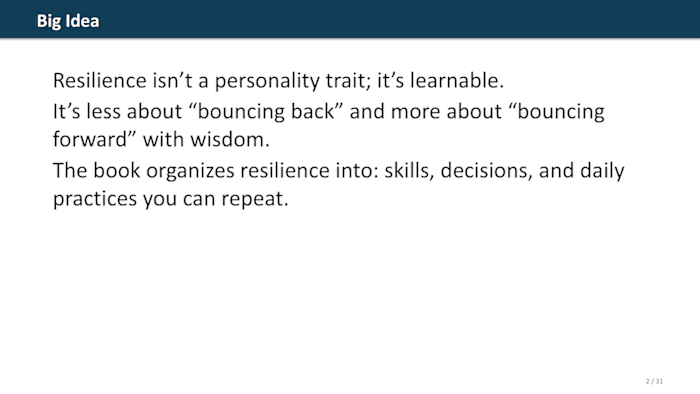
Resilience, in the Rise Strong universe, isn’t the glamorous ability to smile through chaos like a motivational poster with teeth. It’s learnable. Trainable. Repeatable. It’s less “bouncing back” and more “bouncing forward” with wisdom—especially when your life doesn’t return to “normal,” because the old normal is gone.
So this is an article for real people living in real weather.
It’s for the ones who’ve been dealt a rough hand—and are tired of pretending it’s fine.
Step One: Stop Fighting the Dealer
If you want a simple definition of suffering, here it is:
Suffering = pain + resistance.
Pain is unavoidable. Resistance is optional.
This is why the resilience path begins, not with hustle, not with positivity, not with a five-year plan, but with acceptance. And no, acceptance is not “giving up.” That’s resignation’s job.
Resignation is passive: “Nothing matters, so why try?”
Acceptance is active: “This is what is. Now what can I do within these parameters?”
book Rise Strong
Resignation fixates on what’s lost.
Acceptance redirects attention to what remains.
book Rise Strong
Resignation concludes the story.
Acceptance turns the page and says, “New chapter.”
A practical way to do this comes from the Serenity Prayer framework: accept what you can’t change, change what you can, and get wise enough to tell the difference.
book Rise Strong
Not glamorous. But powerful.
Because the moment you stop arguing with reality, you get your energy back. And energy is leverage.
Step Two: Remember What Resilience Actually Is
We need to clear out the junk myths first, because they clog the whole system.
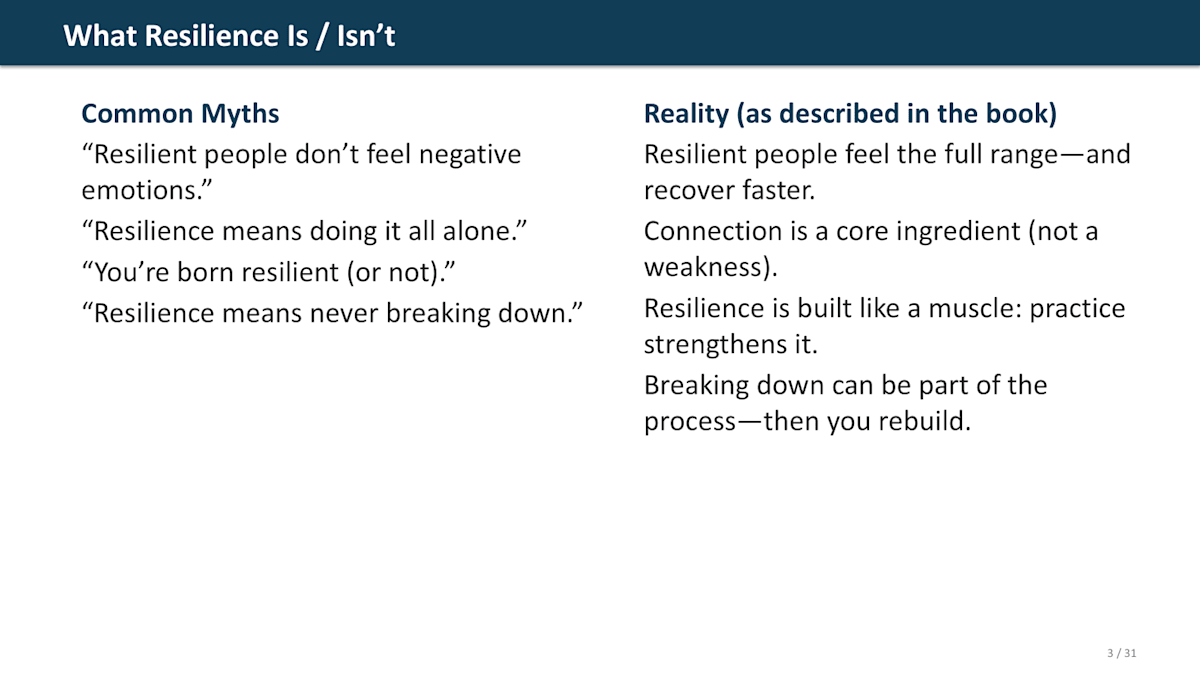
Resilience doesn’t mean you don’t feel negative emotions. It means you feel the full range, and recover faster.
Resilience doesn’t mean you do it alone. Connection is a core ingredient, not a weakness.
Resilience isn’t something you’re born with or without. It’s built like a muscle.
Resilience doesn’t mean you never break down. Sometimes breaking down is part of the process, then you rebuild.
Or, as the book puts it: resilience isn’t “bouncing back” to some imaginary version of your former life. It’s the momentum of “bouncing forward,” even when it’s messy, nonlinear, and occasionally looks like a step backward.
book Rise Strong
That word, momentum, matters. Because your hand might be bad, but your next move is still yours.
Step Three: Use the Resilience Master Model
When life deals you a hand you didn’t choose, you need an operating model. A way to respond that doesn’t depend on your mood, your willpower, or whether you had a good night’s sleep.
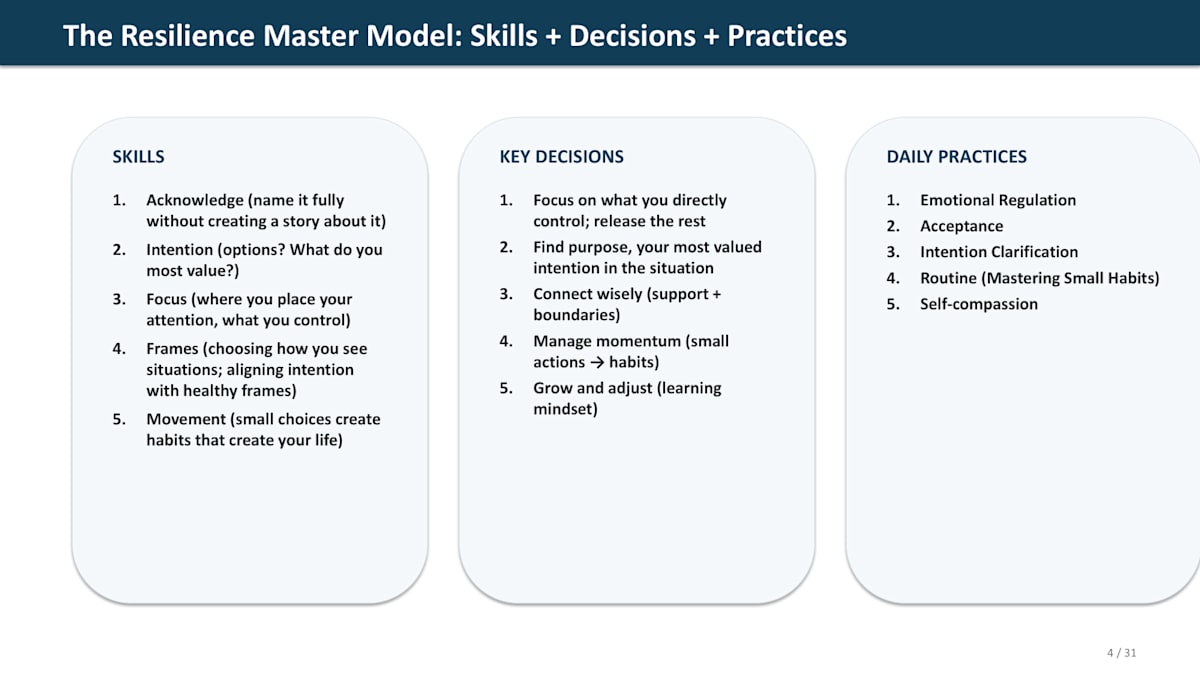
Rise Strong organizes resilience into three layers:
- Skills (what you can train)
- Decisions (what you choose)
-
Daily practices (what you repeat)
The five skills
Acknowledge: name what’s true without spinning a story
- Intention: identify what you value and what you’re aiming for
- Focus: place attention where you have influence
- Frames: choose the most reality-based, momentum-building interpretation
-
Movement: small choices create habits; habits create your life
Here’s the point: you can’t always change the hand. But you can change your skills at playing it.
Step Four: Play the Hand—One Skill at a Time
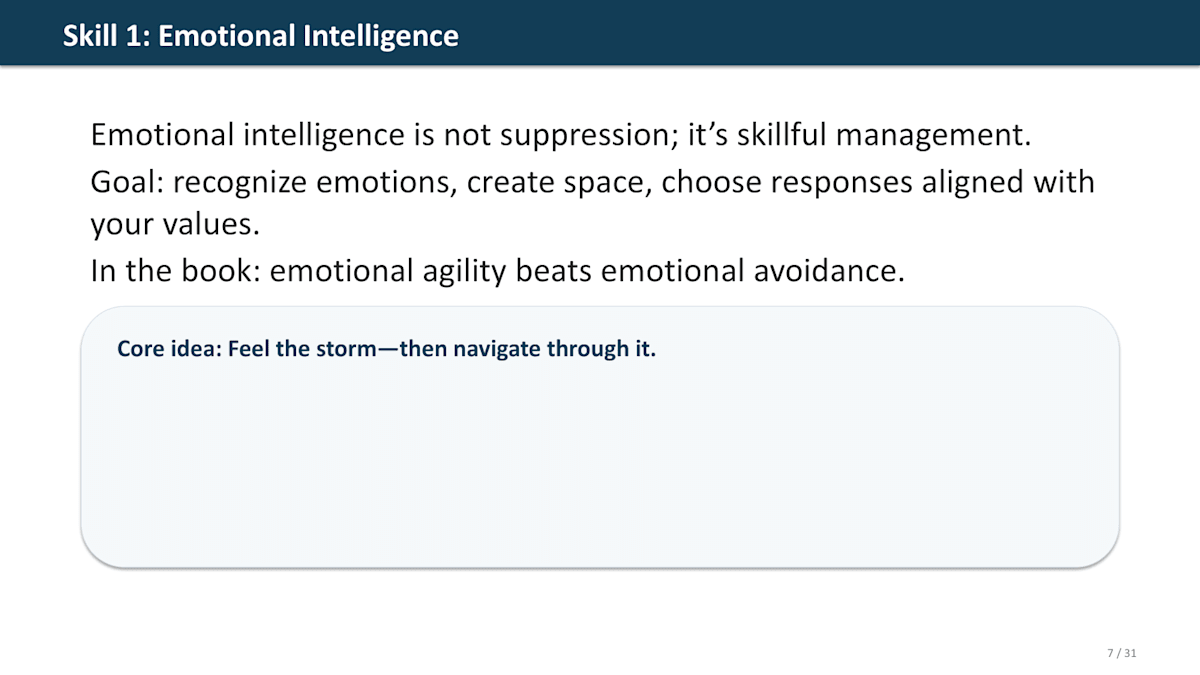
1) Emotional intelligence: feel the storm, then navigate
This is not suppression. It’s skillful management: recognize the emotion, create space, and choose a response aligned with your values.
A practical framework in the deck is the four phases of regulation:
- Recognition
- Acceptance
- Investigation
- Response
So instead of “I’m fine” (a lie) or “I’m ruined” (a story), you get to say:
“This is grief.”
“This is fear.”
“This is anger.”
Name it. Breathe. Then decide what you do next.
2) Problem-solving: run PDCA, not panic
When the old map no longer works, resilient people shift into a learning loop: Plan → Do → Check → Adjust.
Notice how unromantic this is. PDCA doesn’t ask you to be inspired. It asks you to be curious and willing.
- Name what’s true (no denial, no catastrophizing)
- Generate options before you pick one
- Choose a “good enough to test” path
- Run small, reversible experiments
- Use feedback and adjust
This is how you play a bad hand: you stop trying to force certainty and start building evidence.
3) Focus: return to what’s real, right now
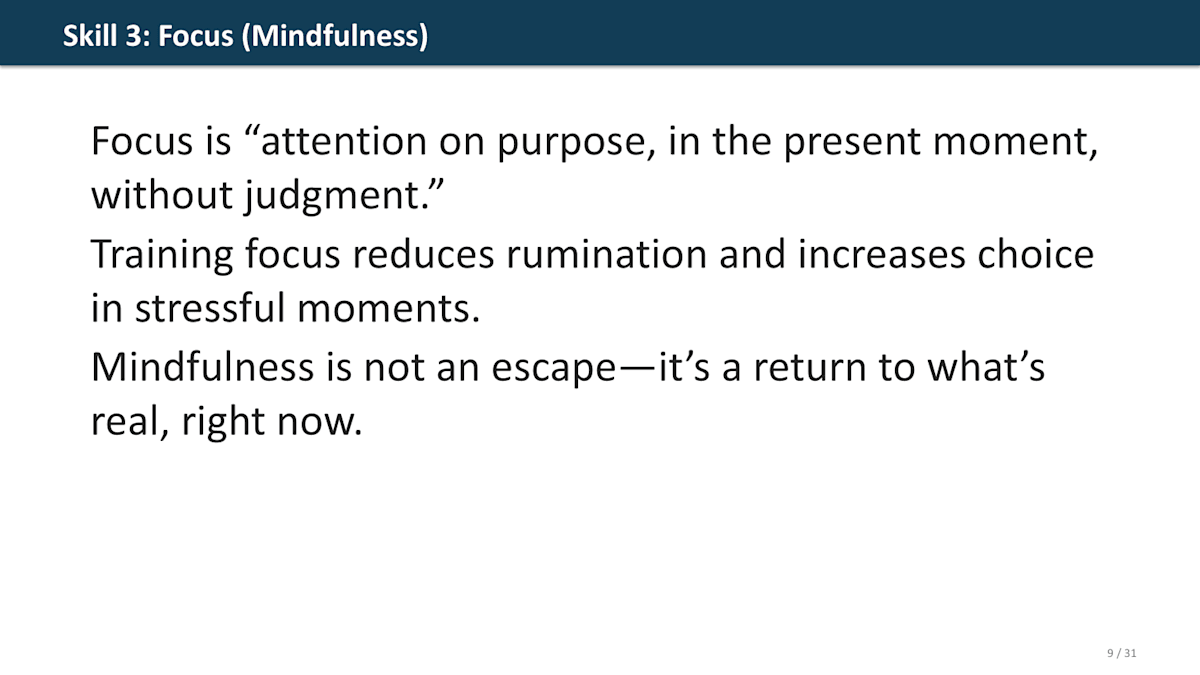
Focus is attention on purpose, in the present moment, without judgment. It’s not an escape hatch. It’s a return to reality—because reality is where your choices live.
A 30-second check-in helps:
- What sensations are in my body?
- What emotions are here?
- What thoughts are moving through my mind?
4) Current reality awareness: honesty is the on-ramp
Denial soothes short-term pain—but blocks long-term change. Current reality awareness is the ability to see yourself and your situation clearly: triggers, strengths, values, patterns, blind spots.
Playing the hand you’re dealt requires one act of courage before all others:
Tell the truth about what is.
Not the story. The facts.
5) Frames: realistic optimism, hope without denial
Frames are the stories we tell about what happened, what it means, and what comes next. The goal isn’t “positive vibes.” The goal is realistic optimism—hope that doesn’t require denial.
In other words:
“This is hard… and it’s not the end of the story.”
That sentence alone has pulled more people out of despair than most productivity hacks ever will.
Step Five: Make the Five Resilience Decisions
Skills are what you train. Decisions are what you choose when life is loud.
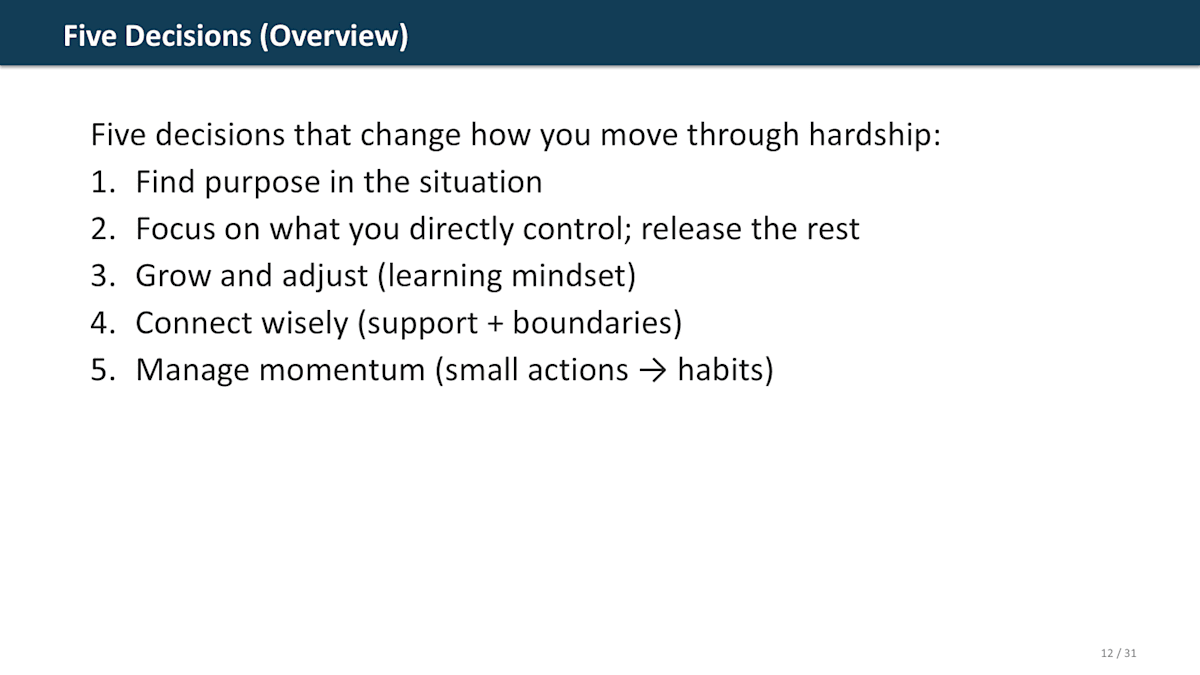
The deck names five resilience decisions:
- Find purpose in the situation
- Focus on what you directly control; release the rest
- Grow and adjust
- Connect wisely
- Manage momentum
Decision: control what you can
Within your control: attention, next action, boundaries, interpretation, support choices.
Outside your control: the past, other people’s choices, random outcomes, how fast others change, some losses.
This is where resilient people stop bleeding energy and start building leverage.
Decision: grow and adjust
The inner script shifts from “Why me?” to “What now?” Setbacks become data. Adversity becomes teacher, not verdict.
If you’re going to play the hand, you can’t afford the fantasy that the hand “should have been different.”
You use what’s in front of you.
Step Six: Win With Micro-Wins
When people hear “play the hand you’re dealt,” they often imagine grand gestures. Big pivots. Reinvention montages. A Rocky soundtrack.
But resilience is usually quieter than that.
It’s momentum—small actions, repeated, becoming habit.
The deck calls it Progress Over Perfection: perfectionism blocks movement; progress creates momentum. Micro-wins generate evidence, confidence, and learning.
One tool from the book is the Minimum Viable Action (MVA)—a tiny action that maintains the habit of movement when life is heavy.
Then, a three-tier plan (low / moderate / high energy days) helps you keep going without pretending every day has the same capacity.
A weekly review makes progress visible, especially when daily progress feels imperceptible.
This is how you play a rough hand like a professional: you don’t demand perfect conditions. You build reliable motion.
Step Seven: Build a Resilience Operating System
Resilience isn’t a single heroic moment. It’s a personal operating system you can run under stress:
- one regulation practice (daily)
- one micro-win commitment (daily)
- one connection action (weekly)
- one review & reset (weekly)
- one meaning-making ritual (as needed)
Repeat → adjust → repeat.
Rise_Strong_Summary_Deck_30slid…
And please notice: none of this requires you to be “built different.” It requires you to be willing—and to practice.
The Real Win: You Get to Choose Who You Become
The hand you’re dealt can break beliefs, disrupt identity, and force the terrifying question: Who am I now?
But that question is also an opening.
Because resilience isn’t pretending the loss didn’t happen.
Resilience is integrating it and continuing the story with more truth, more skill, and more self-respect than you had before.
So yes: play the hand you’re dealt.
But don’t play it like someone trying to “get back to normal.”
Play it like someone building a wiser life—one decision, one micro-win, one honest breath at a time.
And if you need a closing line that sounds like the book because it is the book: your capacity for resilience is greater than you imagine—and it’s waiting for you right in the middle of the mess.