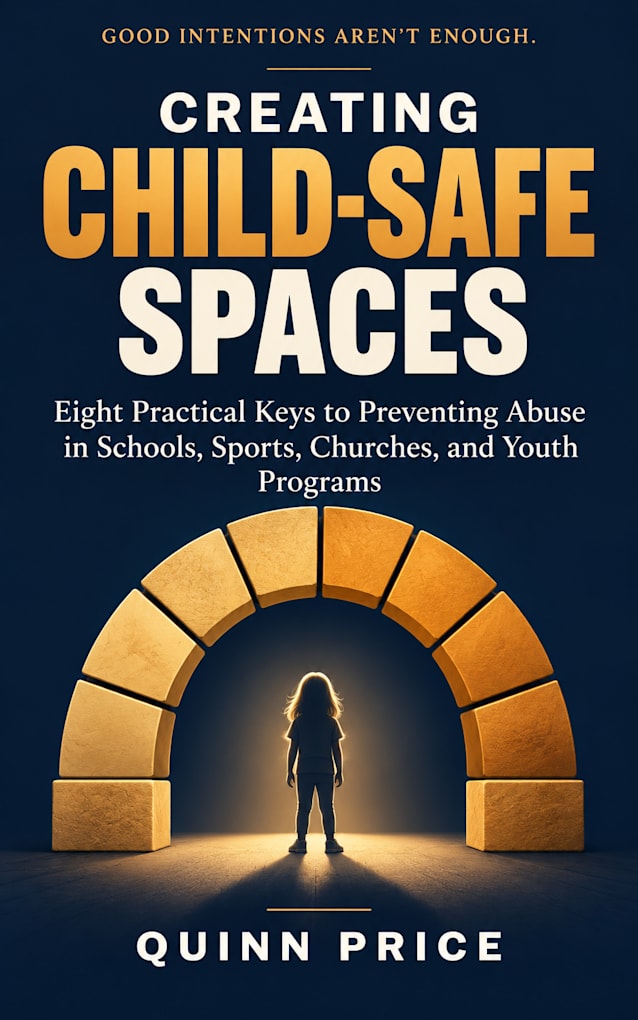
Creating Child-Safe Spaces: Eight Practical Keys to Preventing Abuse in Schools, Sports, Churches, and Youth Programs (Child Safety Resources)
About
“We take child safety seriously.” Every program says it. Here’s how to make it true.
A 2025 global study estimated that roughly one in five women and one in seven men experienced sexual violence before age 18. Most children know the person who harms them. That’s why the places where children learn, play, and belong need safeguards that actually work, not just policies that look good in a binder.
Creating Child-Safe Spaces is a practical, story-driven guide for parents, teachers, coaches, volunteers, youth pastors, social workers, administrators, and boards. You’ll follow one fictional program, Harbor Community Club, through a year of discovering the gap between what everyone believed was happening and what actually was. Then you’ll watch its people close that gap, one honest step at a time.
Inside, you’ll learn how to:
- Turn vague rules into boundaries a new volunteer can use on a busy day
- Make sure every adult is cleared before they get access to children, including the helper who’s “just here today”
- Build supervision that covers pickups, rides, restrooms, and private messages, not just the main room
- Train adults to practice what they’d say when a child discloses something, so they don’t freeze or promise secrecy
- Create a culture where people can raise concerns about a popular adult without paying a price
- Respond to suspected abuse by protecting, reporting, and supporting, without waiting for proof
- Tell the difference between a receipt (a signed policy) and proof (a safeguard that works)
- Build a realistic 90-day plan, check that your fixes worked, and keep them working
Written for real people in real organizations. Parents get eight questions they can ask this week. Frontline adults get practice cases with feedback. Leaders and boards get a clear way to find critical gaps and fix them first. Everyone gets permission to start where they are.
The book is aligned with the Safe by Design assessment, available free online, and a companion workbook for hands-on use.
This isn’t a book about fear. It’s a book about what ordinary people can do, starting tomorrow, to make harm harder to commit, easier to notice, and faster to stop.